SOIL NAILING AND ROCK ANCHOR
Soil nailing and rock anchor are slope stabilization techniques used to ensure the safety of slopes, excavations, and earth-retaining structures. Both methods involve installing reinforcement elements into the ground to enhance structural integrity and prevent failures such as landslides or wall collapses.
Soil nailing is commonly used to retain roadway cuts and building excavations, as well as to improve the stability of existing retaining walls. Meanwhile, rock anchors are utilized in rock formations to provide reinforcement for structures such as tunnels, foundations, and heavy-duty structural components.
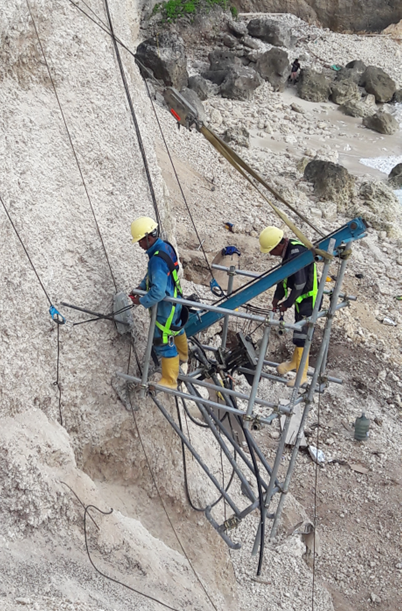
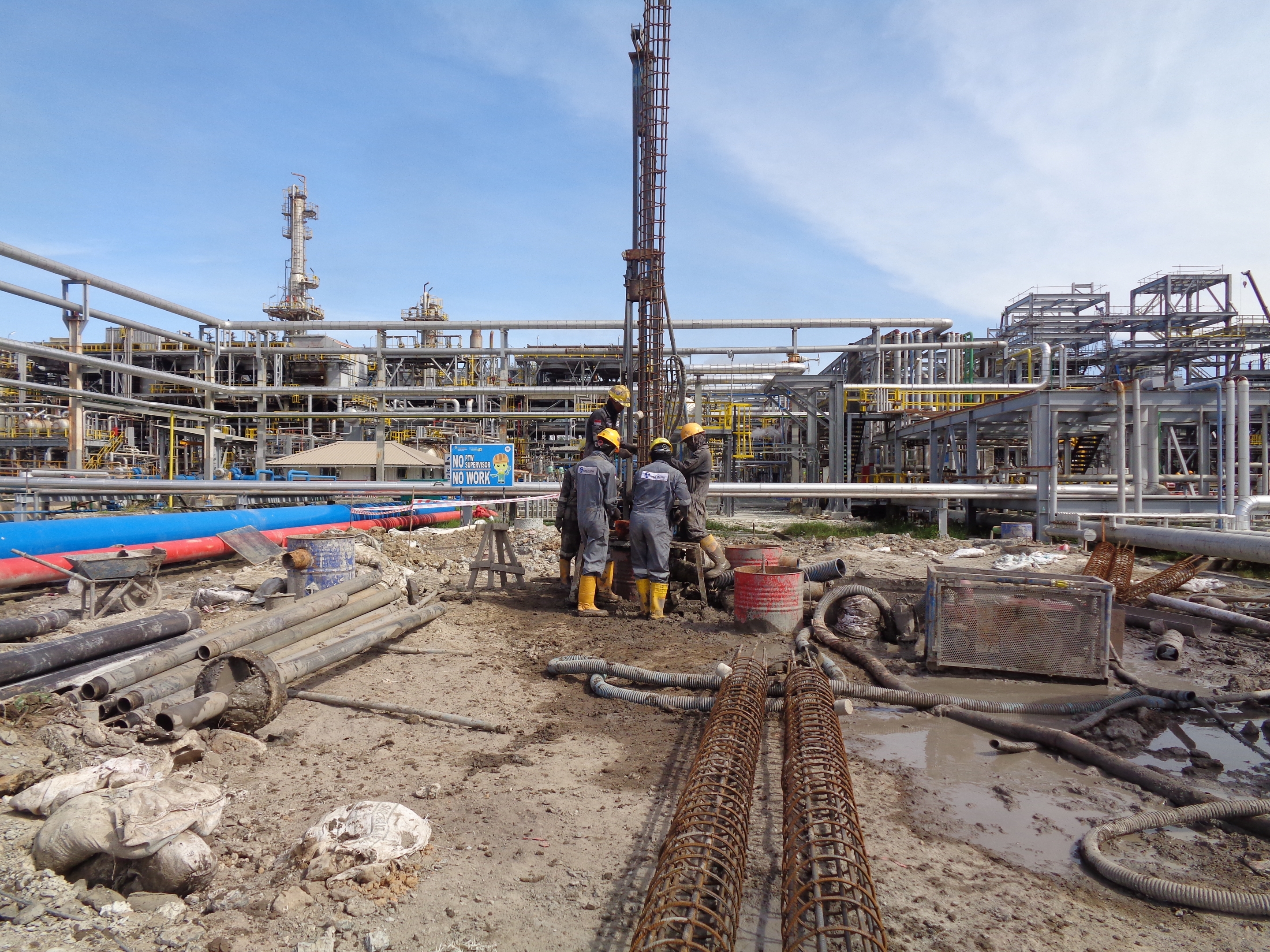
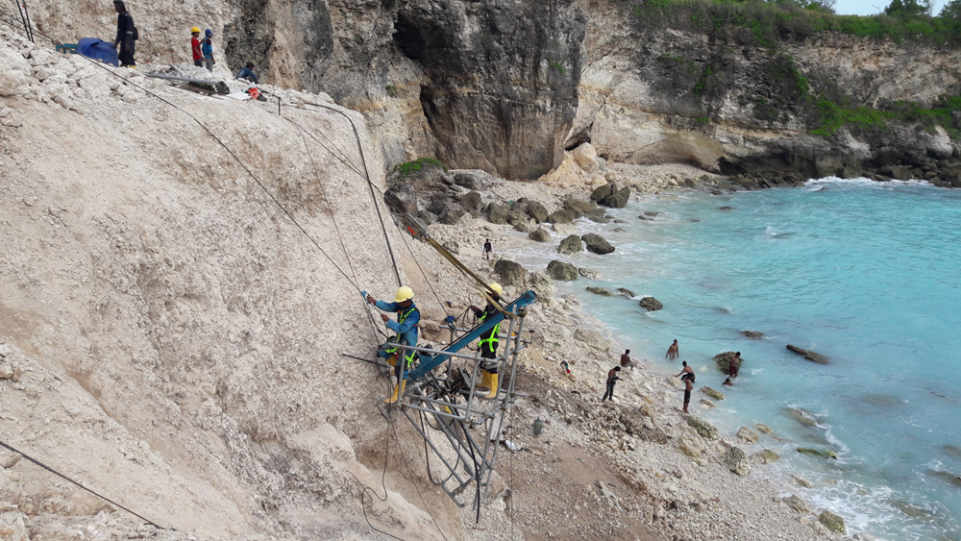
Our method utilizes portable drilling rigs, allowing for efficient rig setup and maneuverability even in challenging locations.
Download our brochures:

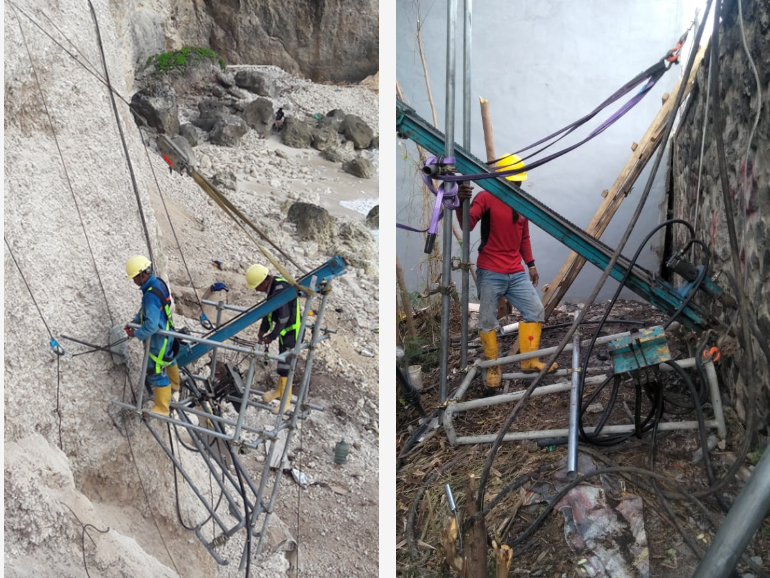
Soil Nailing
Soil nailing is a solution for strengthening soil on slopes to maintain the stability of excavations, walls, or soils by installing steel rods and reinforced grout into the soil.
This system helps create a strong, integrated system that holds the soil in place, preventing erosion, landslides, or collapse.
Rock Anchor
Rock anchor is a technique used to enhance the stability of rock formations, slopes, retaining walls, or other structures subject to loads from rock masses. The process begins with drilling a borehole into the rock, followed by the installation of a steel anchor and grout, and concludes with the fitting of an end plate and nut.
The primary function of an anchor is to reinforce the rock structure to make it more stable, reducing the potential for movement and landslides while increasing the load-bearing capacity against forces such as seismic activity or high live loads.
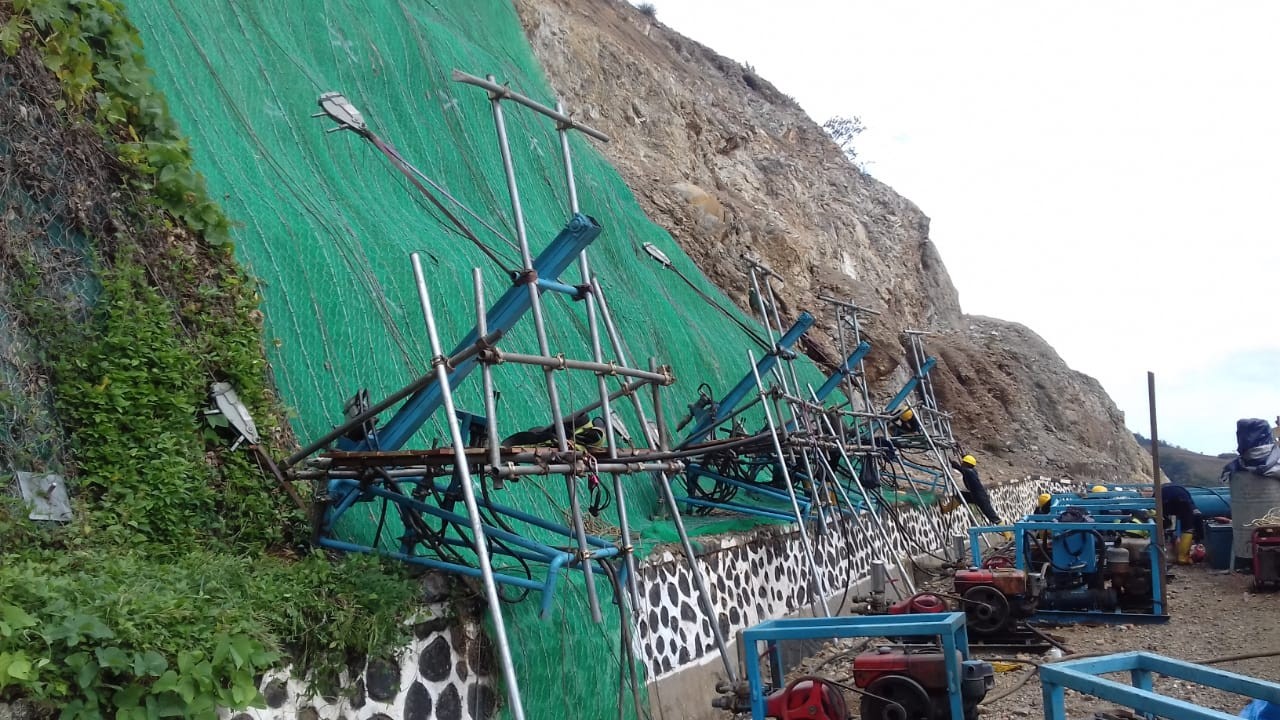
Applications and Benefits
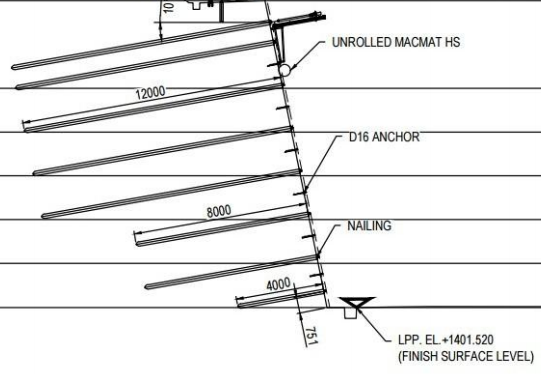
Soil nailing and rock anchor’s applications are:
- Temporary and/or permanent retention of excavated soil
- Stabilisation of tunnel walls
- Slope stabilisation.
- Repair of retaining walls.
Soil nailing and rock anchor’s benefits are:
- Can be adapted to different ground conditions (clays, soil, weathered rock, hard rock).
- More cost-effective than concrete retaining structures.
- Quick installation.
- Preserves existing ground profile with less environmental impact.
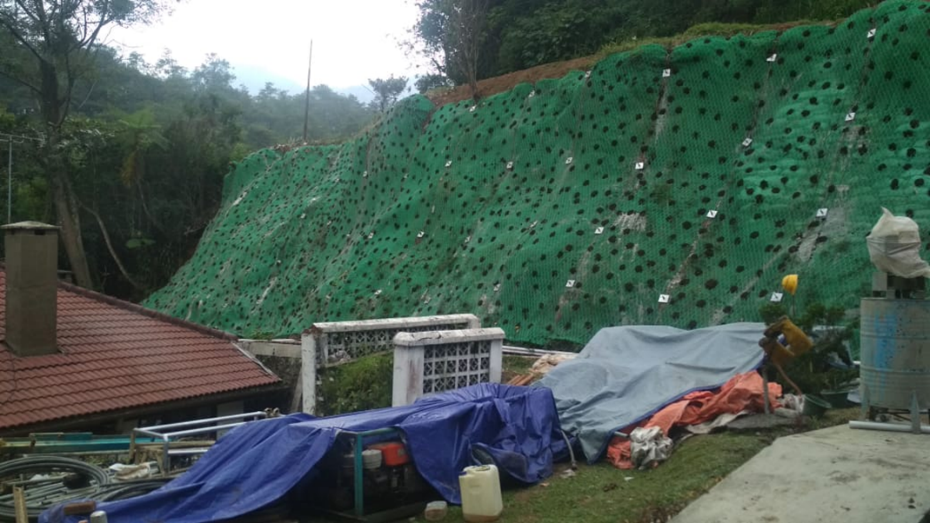
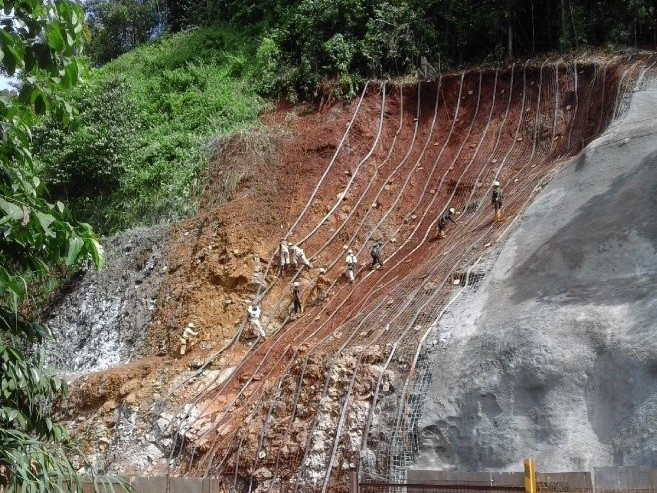
- Can be integrated with shotcrete, wire mesh, or geomat facing for erosion control.
Soil nailing is possible in a wide range of materials, including:
- Clays.
- Sandy soils / silts
- Weathered rock.
- Heterogeneous and stratified soils.
Soil nailing is not suitable in:
- Soft, plastic clays.
- Organics/peat
- Loose (N < 10), low density and/or saturated soils .
Typical Work Method
- Drilling Preparation: Set up and mark the borehole positions at the planned locations along the slope.
- Borehole Drilling: Drill at the specified angle to the required depth, depending on the design specifications.
- Nail/Anchor Installation: Insert the steel bars into the drilled boreholes.
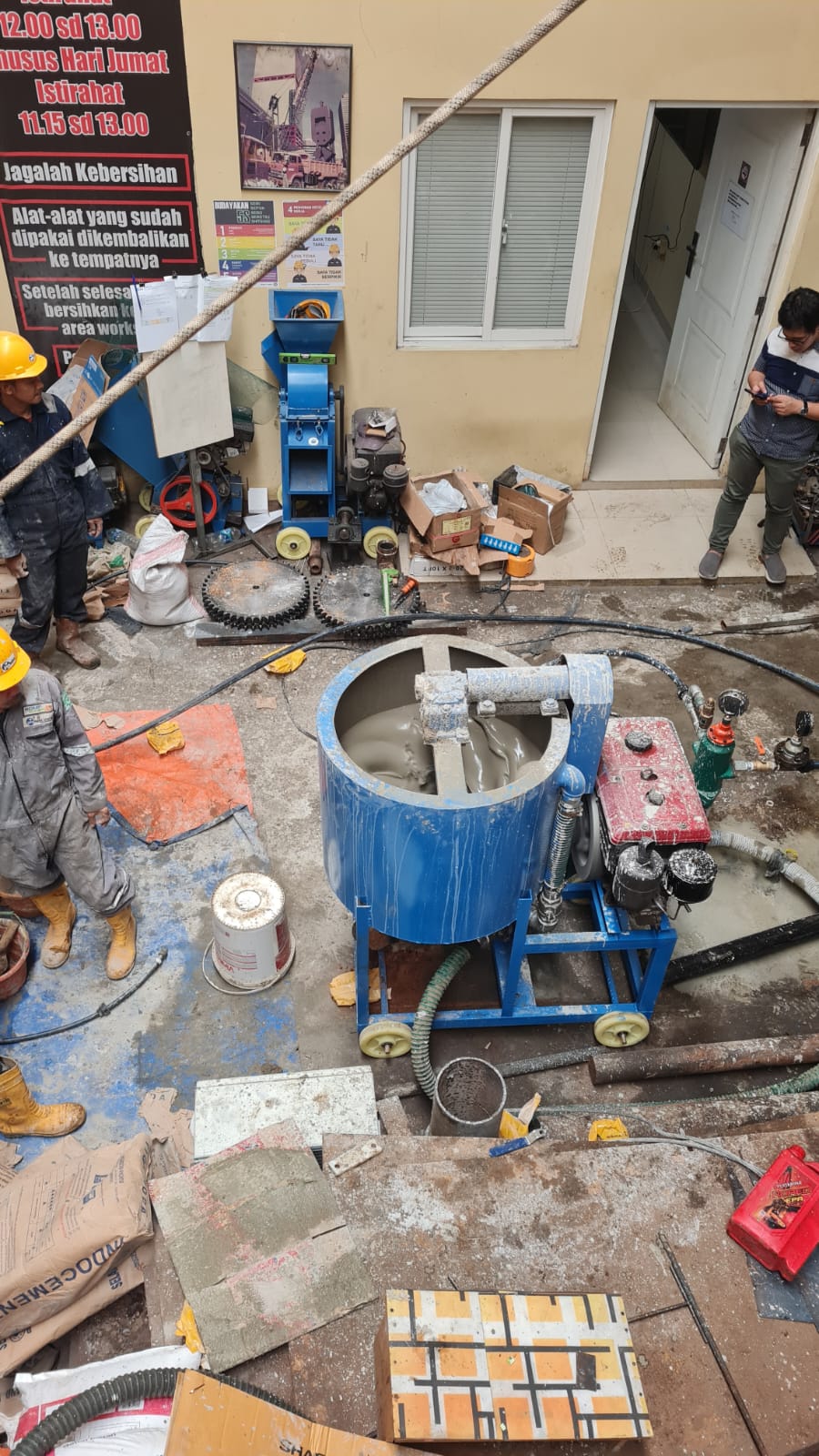
- Grouting: Fill the hole with grout to bond the nail to the surrounding soil and provide corrosion protection.
- Plate Installation: Once the grout surface is leveled, the bearing plate is installed directly against the grout and secured using a nut and washer.
- Surface Treatment (optional): Apply facing materials (e.g., shotcrete or erosion control) for additional stabilization.
Key Points
- If working at heights, additional scaffolding and climbing equipment can be added to the equipment
- The drainage system can be applied to reduce water pressure and water saturation on reinforced soil slopes.
- Corrosion protection can be applied on nails/anchors using epoxy coating (cold galvanising) or hot dip galvanising
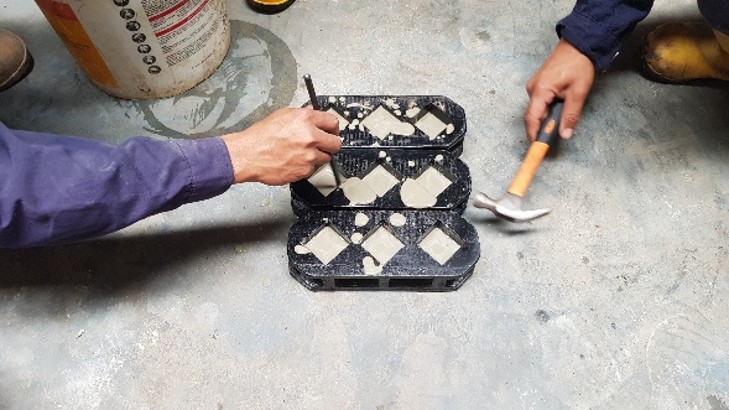
- The common grout strength is 210 – 280 kg/cm2 in 28 days
- Additional additives or changes of mixtures can be implemented for more strength
Our Projects
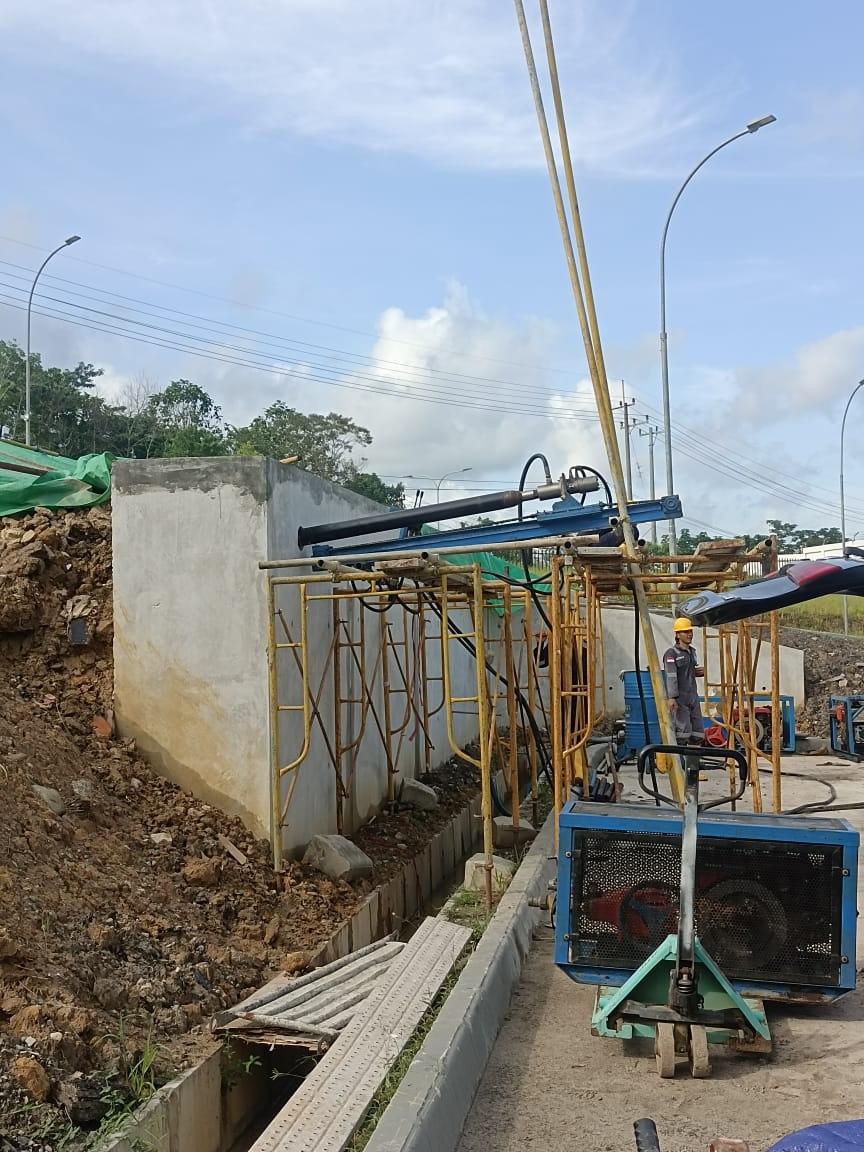
Our Equipment
Our compact hydraulic drilling technology enables precise soil nailing or rock anchor installation in restricted access areas, delivering optimal results even in the most challenging work environments.